Playing a Native American style flute – Tips for starting out
Exceptions abound. The following comments describe my own observations.
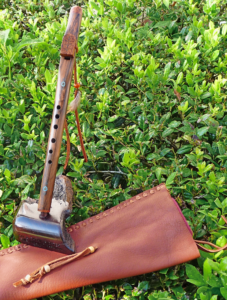
Most, but not all, Native American style flutes are played by breathing while one’s mouth is placed on or very near the mouthpiece. And five or six fingers are used to cover finger holes at the same time the flute is balanced using some combination of thumbs and fingers.
Factors employed in a flute’s construction can determine how a flute may be played. For instance, back pressure or the resistance to a player’s breath while playing – and tuning – including notes reached using cross-fingering playing techniques, can be used to distinguish one flute (or flute maker) from another. But those are topics for another time.
I’ve noticed certain physical characteristics determine the maximum and minimum sizes of the flutes that can be comfortably played. I’ve also learned many of us, wish we could play a flute one key deeper or higher than we truly find comfortable.
- Maximum Reach – the distance between the mouthpiece and the finger hole furthest away – typically towards the bore end or south end of the flute.
- Spread or Span – describes distances between adjacent finger holes with the total being the distance from the uppermost (north or #6) and lowest (south or #1) finger holes.
- Coverage – clear, non-squeaky notes are played by fully covering each finger hole. Coverage refers to the size of the player’s fingers with respect to the ability to completely cover each hole using the thickest part of the pad at the end of the finger. Not the finger tip held on end in the hole! Larger holes usually require larger fingers or in some cases, advanced techniques to accomplish this requirement.
TIP: New players should be encouraged to relax their shoulders while playing. Doing this makes it difficult to perch the end of their finger tips in the holes and at the same time, makes it easier to cover the finger holes using the pad at the end of their fingers. Which IS the objective.
So … at some point, because one of these flutes is never enough, many people eventually discover the largest flute they can comfortably play. Others encounter the smallest flute they can use when they realize they cannot physically compress their fingers close enough together to consistently cover the holes to get the notes they desire.
This is one reason, people who don’t have a lot of playing experience are often advised to begin playing 3/4”-bore flutes which often include the keys of Bb4 (A#), A, Gb4 (A#) and G#4.
7/8”-bore flutes, often in the keys of G4, F#4(Gb) or F4 are the next size larger and often may be successfully played by beginners.
When considering a new flute purchase, it may be a good idea to focus on appearance and suitability first. After all, if a flute doesn’t look or sound good, why should there be any further interest? Oh, I get it. Collectors may be interested in a specific flute maker or in having a particular key or in owning a flute with uniquely attractive decorative elements. All of these reasons are perfectly justifiable and acceptable.
But if a flute cannot be comfortably used, it is probably not going to be played very often. Possessing a “wall hanger” is not seen as a complement by most flute makers I know.
I believe the three playing characteristics (reach; spread/span; and, coverage) are easily determined when looking and handling flutes in person. This is a bit harder to do when buying remotely.
While these concepts probably don’t need to be considered too much when looking at mid-range sized flutes (3/4″ or 7/8”-bore flutes). Asking about these values when a flute has a 1” or larger bore might be advisable.
Knowing the location of each finger hole in relation to the distance between the approximate hole center and mouthpiece, can permit the flute’s reach to be simulated using a wooden dowel or even a mop or broom handle.
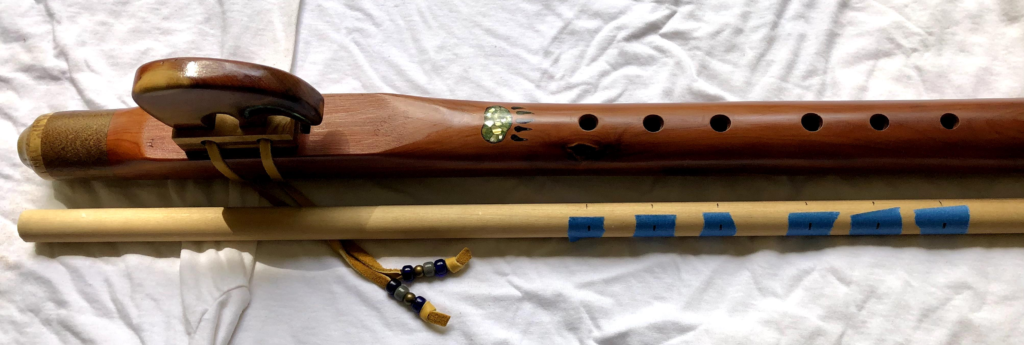
This photograph shows a 1 3/8”-diameter flute tuned as a low B3. It is next to a dowel marked with pencil and pieces of blue painter’s tape. The finger holes are a reasonably consistent 3/8” in diameter. The full span is 197 mm or approximately 7.8” from top to bottom finger holes.
| Mouth to hole centers | mm | ~ inches |
|---|---|---|
| 6 (top) | 332 | 13 1/16 |
| 5 | 369 | 14 1/2 |
| 4 | 406 | 16 |
| 3 | 455 | 17 7/8 |
| 2 | 492 | 18 3/8 |
| 1 (bottom) | 529 | 20 3/4 |
Think you could play this flute?
I believe it is better to be informed before making a buying decision than it is to be surprised or disappointed after a flute is delivered.
Flute making and leather work are heart-felt activities. I usually have an inventory of completed flutes. Commissioned assignments are always welcome.
Creation of a custom flute or flute bag should involve elements of your own vision and ideas.
I stand behind my work. Any problems associated with my workmanship, will be resolved to the best of my ability.
Return Policy
If displeased with a new flute or leather flute bag for any reason, contact me right away. With my approval, within 14 days of the sale items in still new condition may be returned at the buyer’s expense for a nearly full refund. That is, I will refund the original purchase price less credit card transaction processing fees and/or shipping costs. As of 04/2023, charge card fees are no longer being refunded by my service provider.
Custom designed flutes and leather bags are considered final sale items and as such, are not subject to this return policy.
Privacy Policy
A customer’s privacy is of the utmost importance. Beyond use of information required to process payments, I do not share telephone numbers, credit card information, physical address, email addresses or any other personal information.
Native American style Flutes
Flute prices currently begin at $129 for an Introductory flute. These flutes have a 3/4″ bore flute and a simple block of domestic Western Red Cedar without any decorative frills. The key of A is the most common in this style. I may sometimes offer an Ab (G#), Bb (A#) or a B.
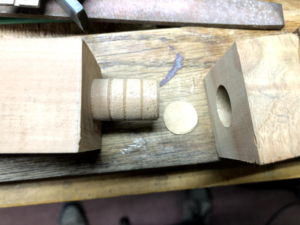
A mid-range flute with a 3/4″ to 1″ bore, decorative mouthpiece (using tenon construction) with a more elaborate block requiring more time and effort will be priced appropriately. Such flutes often include decorative elements consisting of crushed stone inlay, polished stones (agate or jasper) or wood burned images and are typically $350 or more, depending on final design and component elements.
Exotic woods, large-bore flutes and more elaborate designs are priced accordingly.
So far, I’ve made flutes using 72 distinct wood species. This is a compressed list. As an example, I have just one entry for Walnut. This includes: river recovery Walnut, Black Walnut, English Walnut, Claro Walnut, Walnut burl and examples of walnut from different parts of the world (e,g., Wisconsin; Tennessee; Peru; figured Californian). That’s merely one item on the list of 70+ distinct species.
I favor native North American woods including Black Walnut, Cherry, Maple, Eastern Red Cedar, Western Red Cedar and Cypress for flute bodies. I’ve also used (among others): African White Milkwood, Alaskan Yellow Cedar, Alder, Ancient Kauri, Apple, Ash, Beech, Black & White Ebony, Black Limba, Black Walnut, Blue Mahoe, Box Elder, Buckeye, Butternut, Camphor, Cherry, Cottonwood, Ceylon Satinwood, Cypress, Dogwood, Douglas Fir, Dyer Oak Burl, Eastern Red Cedar, Elm, English Yew, English Walnut, Hickory, Holly, Honduran Mahogany, Honey Locust, Imbuia, Indian Rosewood, Iridescent Laos Pheasant wood, Jatoba (Brazilian Cherry), Kansas Birch, Kentucky Coffeetree, Koa, Live Oak, Locust burl, Macassar Ebony, Mango, Maple, Masur Birch, Mulberry, Myrtle, Olivewood, Padauk, Pecan, Peroba Rosa, Pine, Pistachio, Raintree (Monkeypod), Red Maple, Redwood, Brazilian Rosewood, Sapele, Shedua, Sweetgum, Swiss Pear, Sycamore, Tamarind, Tasmanian Blackwood, Teak, Tigerwood, Western Red Cedar, White Cedar, Yellow Birch, and Zebrawood. Once I even made a bamboo flute! I don’t always have these types of wood in stock and cannot necessarily obtain such woods when desired.
Burls and exotic woods serve as great accent material. I enjoy using combinations of woods offering contrasting colors or textures.
When I started buying Native American style flutes for my personal collection, I thought a bored one-piece flute was superior. Now, with a better understand how these instruments actually work, I’m convinced the advantages of routing individual halves of a flute before gluing them together, are substantial. This approach allows detailed attention to be focused on every interior surface that has anything to do with producing the flute’s music. Modern glues, properly applied, are often stronger than the wood itself. This is especially important when the narrow wall thickness of today’s Native American style flute is considered.
I like using a variety of decorative techniques. I enjoy doing inlay designs with different materials including as examples: crushed minerals like turquoise, azurite, malachite, common opal, red coral, shaved metal like brass, sea shells, etc. Wood burning offers a lot of different effects. Aniline dyes, acrylic paints, PrismaColor pencils, metallic-looking powders and other resources can be used to add additional pops of color. Old-time wood working methods can ebonize or darken Walnut, Pistachio and other high-tannin woods. A different solution can age Cherry so it too looks very old. Blocks can include highly polished stones such as agates and jasper or common objects like coins, metal bars or collections of natural materials like individual shells that comprise modern Coquina. All of my blocks have a bottom layer of unfinished Eastern Red Cedar. This is functional as well as a symbolic choice on my part.
For a flute finish, I most often use multiple coats of Polymerized Tung Oil of lower and higher viscosity. That is followed by various shades of Shellac (Platinum Blonde, Blonde, Orange, Ruby or Maroon). I prepare the shellac solutions personally using dry flakes and solvent so I can control the viscosity and freshness. Sometimes if I’m seeking a very high gloss finish, I’ll complete the process by applying clear acrylic lacquer over the shellac. A final hand-rubbing using pumice or rottenstone with rubbing oil, produces a very high quality, long lasting and low maintenance finish.
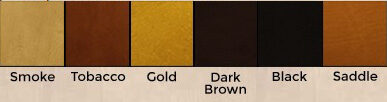
Pricing for my standard, deer hide leather flute bags starts at $300. Such bags are usually 25″ to 28″ long and 6″ – 7″ wide. They are created using high-quality deer hide. Elk leather can be used for a bit more than a deer hide bag but is significantly heavier. The bag will have a braided leather strap and a strip of hand-cut fringe with a natural or simulated natural edge line. Deer leather lacing is used to construct each bag. Subject to availability, different color combinations of leather can be used for the bag, fringe, strap and lacing. Decorative elements such as crow beads of various colors, wooden or carved latch string anchors, antler buttons or sections, wood burned figures, minimal use of acrylic paint, or some combination of these may be included.
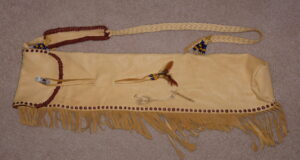
Highly customized and far more elaborately constructed leather bags can created but will be priced accordingly.
If you are interested in acquiring one of my flutes or leather flute bags, send an e-mail message with a few comments to give me an idea of what you’re considering. If I can’t help personally, I will make every effort to guide you to another flute maker.
An advance deposit may be required for custom creations. Time to complete the flute or bag depends on project complexity and my schedule. Above all else, I insist on doing work as well as I am able. Such effort takes time.
When the flute or bag has been completed, I will e-mail photos for review and approval prior to final payment. The quoted price will include insured shipping charges and for in-state Florida customers, Florida sales tax. I am able to send PayPal or Square invoices to facilitate credit or debit card payments.
If you have any questions or comments, please contact dan@nLss-flutes.com.