
Direct questions to dan@nLss-flutes.com
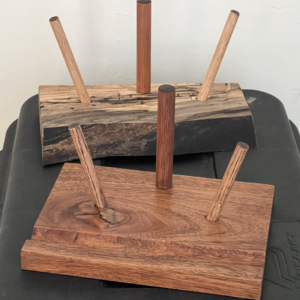
Examples of flat stands with replaceable pegs. The back one is spalted Red Maple and the front is stained Oak. Other stands on hand include Sycamore, Silver Maple, Red Bay and spalted Pecan. Some are stained and others are natural.
All holes are drilled completely through each stand. They are uniformly 1/2″ in diameter. By permanently inserting 1/2″ dowels into larger dowels, taller or bigger flutes can be accommodated in any or all of the existing holes. In these examples, the vertical, center pegs are 7/8″ in diameter. One-half inch pegs on both sides are angled at approximately 75 degrees. All extend above the surface by 5″ or more.
In addition, the rack in the front has a trough which can hold a 4th flute lying horizontal.
These stands are finished using polymerized Tung Oil which produces a satin-looking surface. Others have a top coat of hand-mixed shellac.
They are $59 plus shipping. A $15 discount will be applied when purchased with a flute. Two 1/2″ pegs and one 7/8″-diameter peg OR three 1/2″ pegs are included – buyer’s choice.
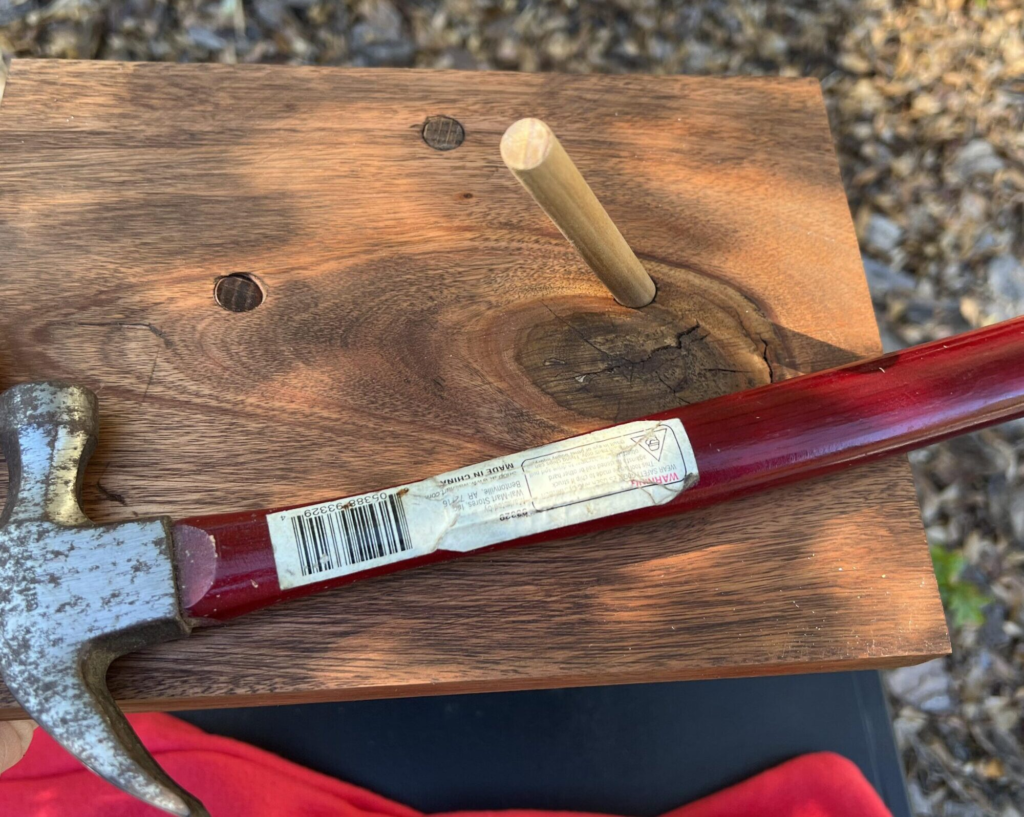
Remove pegs using an undersized dowel to tap them out from the bottom. Don’t twist and pull from the top because that may damage some pegs unnecessarily.
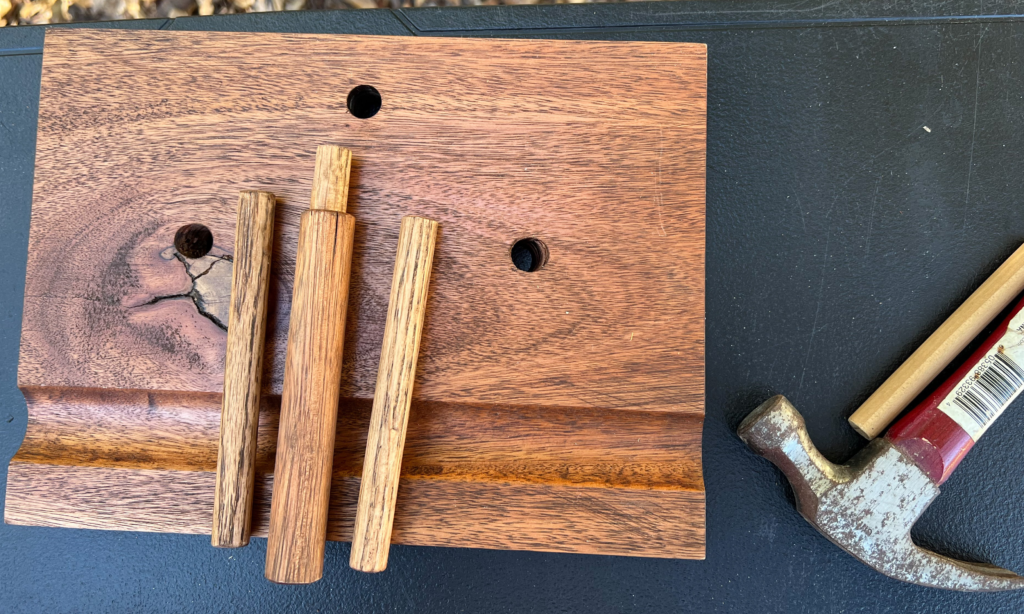
Pegs may be removed so the stand travels safely in a flat rate USPS box. Assembly merely involves using a mallet or hammer to lightly tap each included peg into the holes.
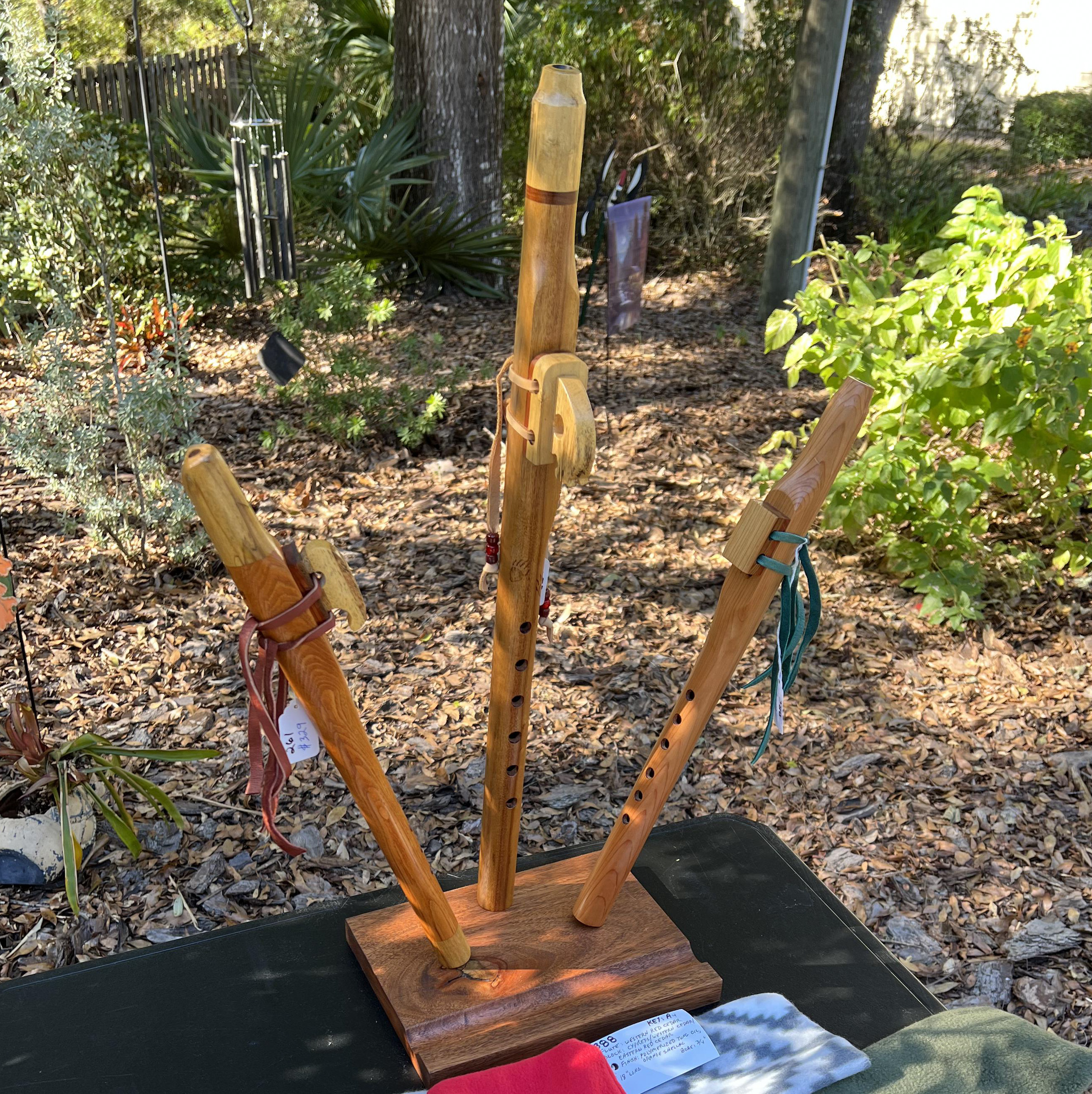
An example of a flat table top stand in use …. flutes aren’t included. There is room for another flute in the horizontal groove along the front edge of the stand.
Flute Racks
These uniquely beautiful flute racks were made using slabs of live edge wood. Nearly 3″ long oak pegs are spaced far enough apart to focus attention on flutes being displayed.
They are finished using polymerized Tung Oil, shellac and lacquer (in that order).
French cleats provide a solid, easily used mounting system. The upper half of each cleat set is glued and screwed to the back of the rack. A small piece of oak is positioned lower on the rack to serve as a spacer meant to keep the slab parallel to the wall. It can be removed if a slight forward tilt is desired.
The lower half of each French cleat is to be attached to a wall using included hollow-wall anchors or other screws. If care is taken to make this cleat level, the flute rack will naturally hang properly. After it has been installed, the rack cleat simply slides down and fits onto the wall cleat. The rack can be removed from the wall at any time just by lifting it up The flute rack can be moved slightly from side to side if needed but aligning both halves of the cleat evenly ensures maximum holding strength.
An included installation kit has the wall-mounted half of the French cleat, two 35-pound capacity hollow wall anchors with screws and a small bubble level.
I’ve devised a method of using 1/2″ PVC pipe and joints to protect the flute pegs from being damaged during shipping. So far, so good.
Installation instructions shown below …
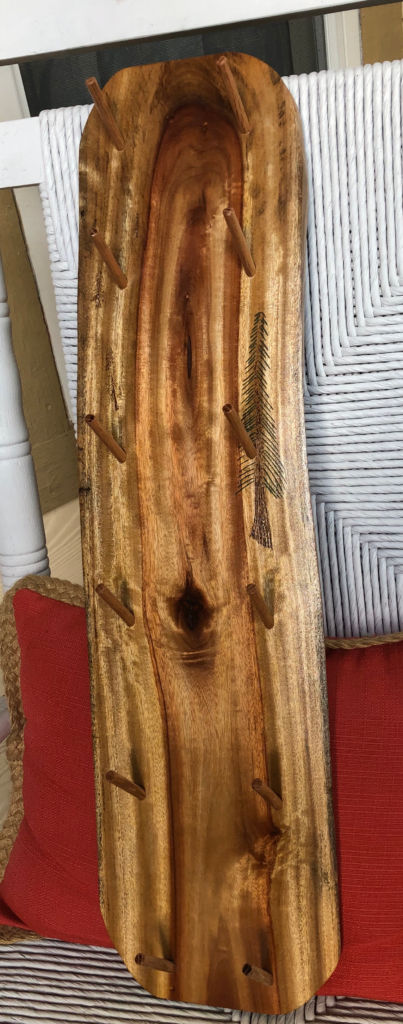
1. Camphor; 6-flutes; evergreen tree stone inlay (malachite and pipestone) with wood burned small background trees; ~ 27″ x 7″; ~ 2.4 lbs; $139 (plus $50 for domestic shipping and handling)
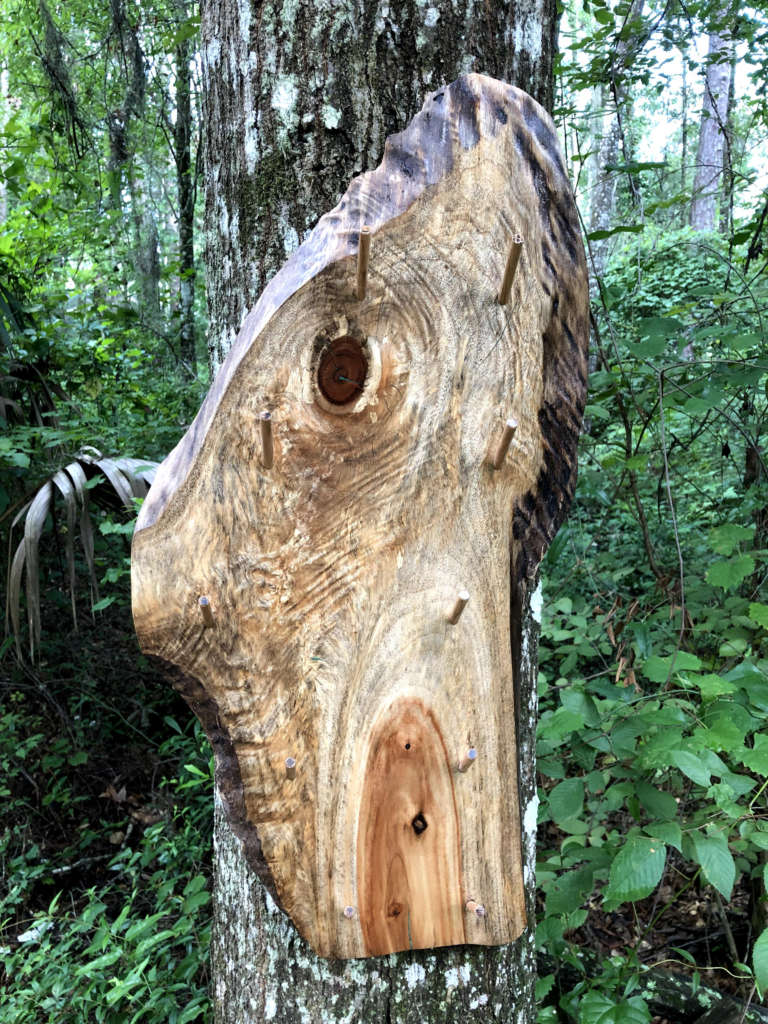
2. Camphor crotch wood, figured; holds up to 5-flutes; ~ 28″ x 14″; ~ 4.2 lbs; $159 (plus $50 for domestic shipping and handling)
Wall Rack Hanging Instructions
Installation Instructions using included hollow wall anchors:
- Select the desired wall location and install one anchor after drilling a 1/4″ hole.
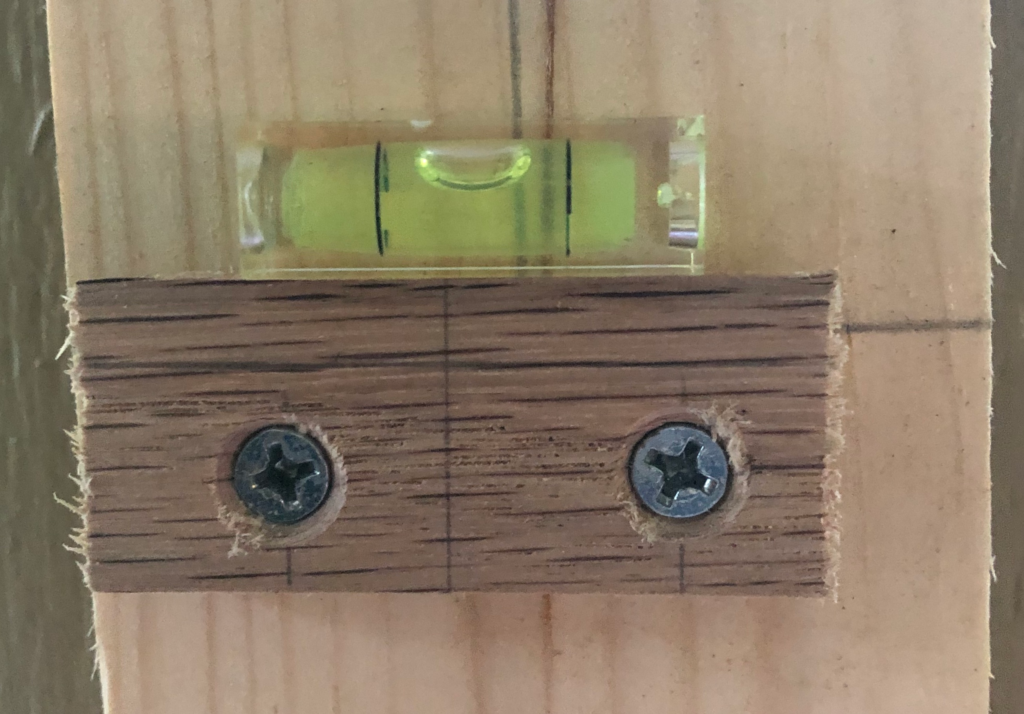
- Temporarily attach the cleat to the wall and hold the loose end with the bubble level resting on top. Move the loose end up or down until the bubble in the level is positioned between the two black lines. Then mark the precise spot for the second wall anchor.
- Remove the cleat; drill the next hole and install the second hollow wall anchor. Then attach the cleat using both anchors.
- Hang the rack-mounted half of the cleat on top of the wall-mounted cleat.
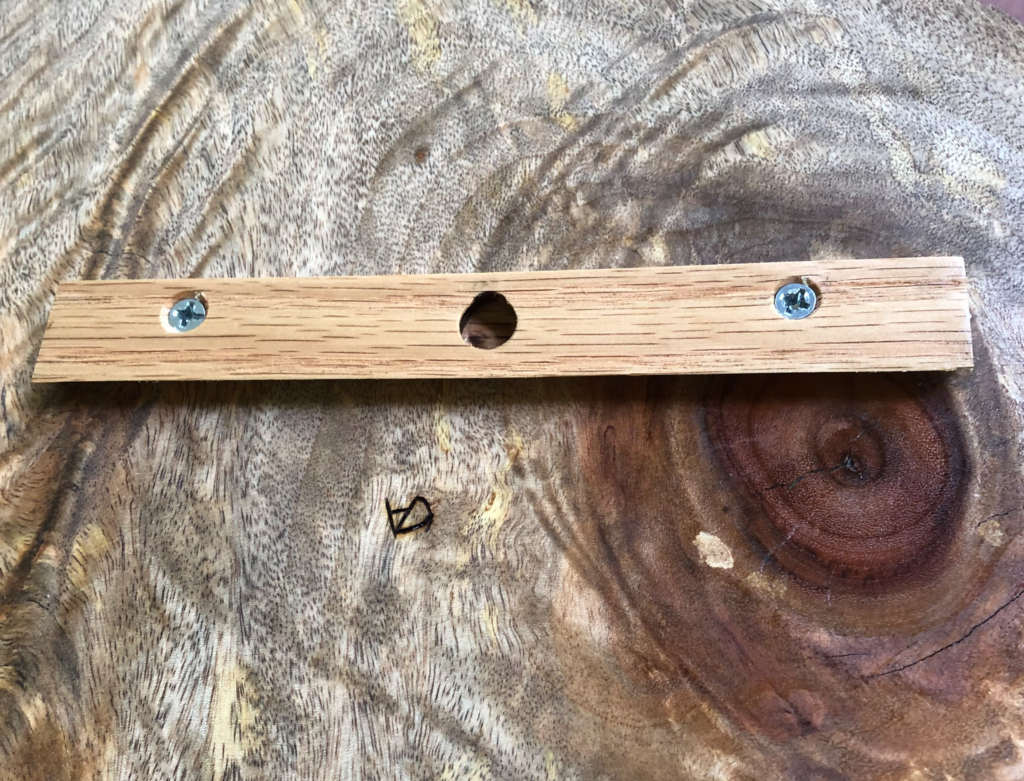
French cleat – rack half; glued and screwed on the back side of the wall rack.
The side of the lower cleat which will be attached to the wall using two hollow wall anchors.
An arrow indicates “up” direction.
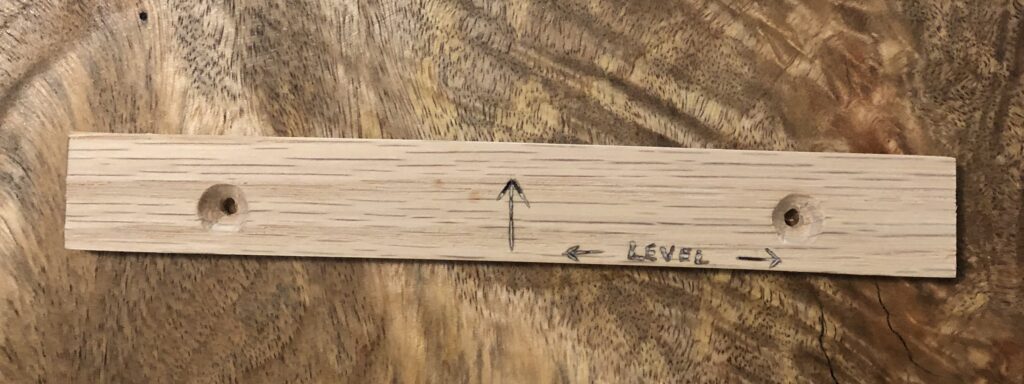
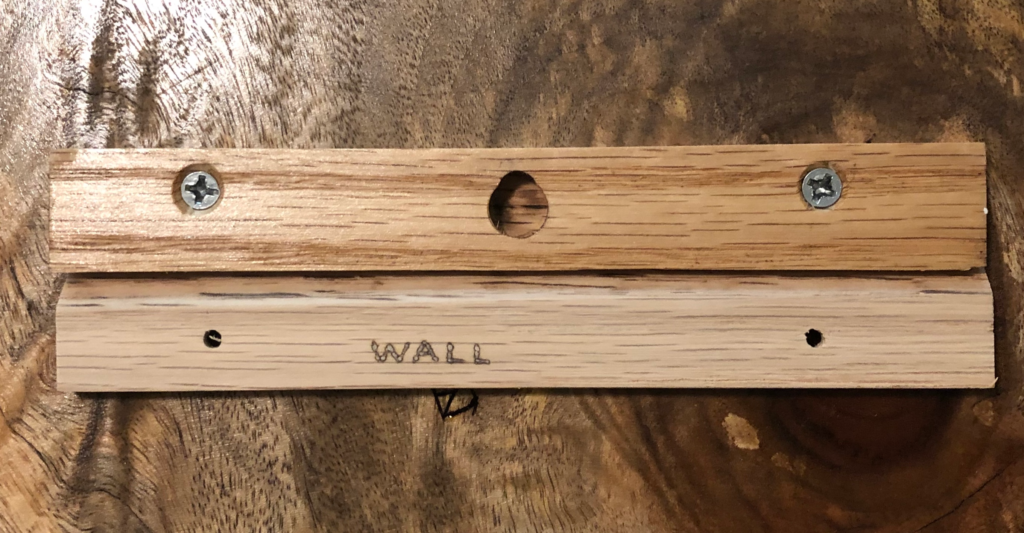
French Cleat – showing upper and lower pieces from the perspective of the wall.
With one of the two screws (hollow wall anchors) in place, use the included bubble level to determine precisely where the second hollow wall anchor must be installed. Mark with a pencil or nail before drilling the second hole in the drywall.
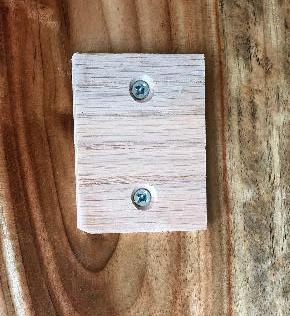
The stand-off is merely screwed onto the back of the rack. It is intended to keep the rack parallel to the wall. It can be removed if a slight downward (forward) tilt is desired for the rack.
Examples of wall racks in use
…. images used with permission
Example showing a wall rack being used in a customer’s home ….
The image above the flute rack is by Lola Rios Swimmer.
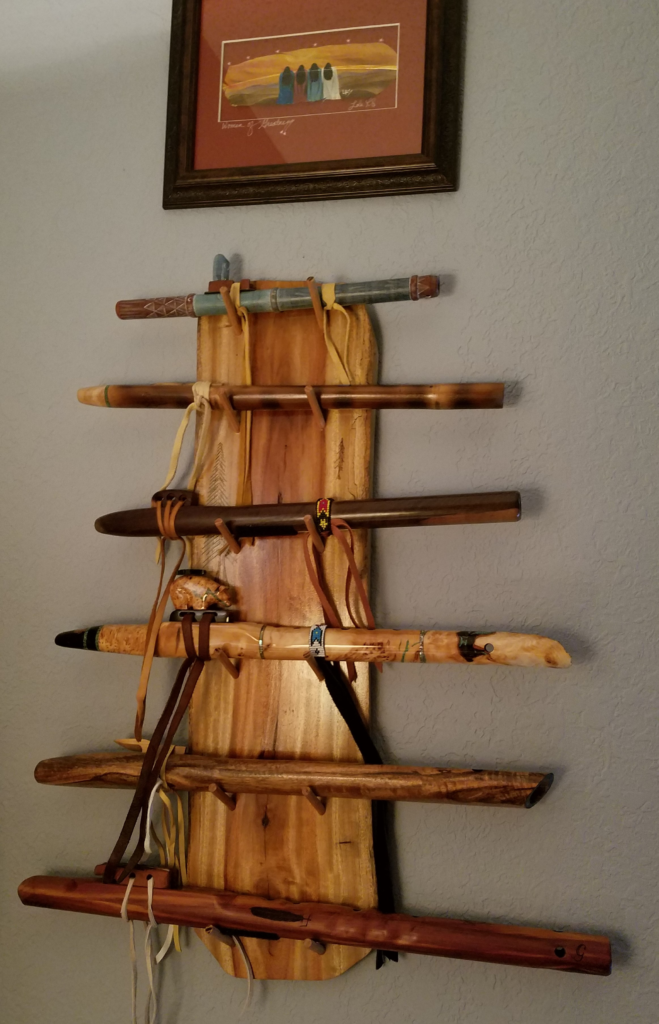
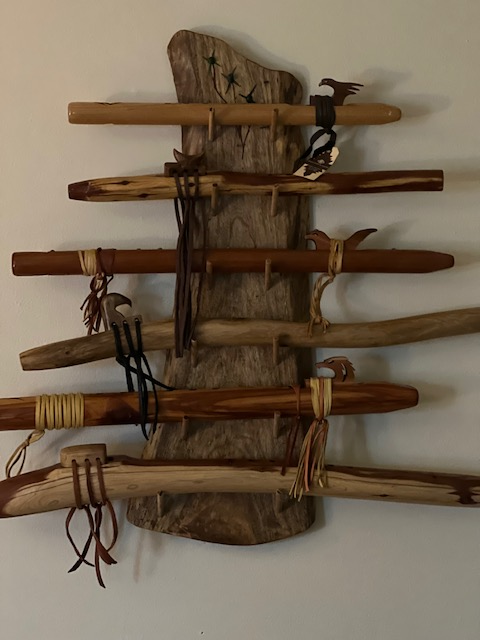
Camphor wall rack – another customer photo. This rack holds 6-flutes. Decorative flower figures include stone inlay (malachite, azurite, both with brass and pipestone) with dyed oak buds; ~ 27″ long by 7″ – 10.5″ wide; ~ 3.0 lbs
These sort of racks allow the beauty of flutes to shine through while adding a complementary and unique element to the display..