- Philosophy – Hints, tips and a discussion about what I do as a flute maker
- Videos – self-recorded ideas for playing a flute, positioning a block and flute-making
- Awards – flute making awards
- Contact – contact information – email only
Why I’m Here – and other important considerations
Native American style flutes captured my interest and my heart in 2001. After picking up a flyer at a pow-wow, my daughters and I attended a flute circle in Gainesville, FL. Within just a few months, we’d each acquired several flutes.
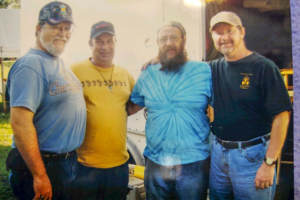
I was amazed by the variation in these incredible instruments. Differences in woods, designs, tones and appearance led me to consider making one of my own. While I thought about it for more than a year, I didn’t act until three accomplished flute makers ganged up on me. In a very good way — at a local pow-wow.
On that fateful day, Kuzin Bruce, Joey Hill and Ray Wood (Island Flutes by Ray) started me on what appears to be a lifelong journey. Later, other world-class flute makers shared important lessons they had learned during many years of their own efforts. I won’t try to name everyone for fear of forgetting someone, but people who came to know me well (Joey Hill, Ray Wood, Darrell Allen (Two Feather Flutes), Leonard McGann (Lone Crow) as well as flute makers I’ve spoken with at events including Billy Whitefox (Stall), Russ Wolf, Dana Ross (Falcon Flutes and Drums), Mike Knight (Old Turtle Flutes), Utah Farris (Flight Feather Flutes), Brad ‘Dog Soldier’ Young (4 Wind Flutes)), and many others, have shared graciously of their expertise, time, advice and wisdom. I will remain eternally grateful.
Please note. I am not an enrolled member of any Native American tribe and therefore describe flutes I make using the word “style” to explicitly indicate they are “made in the style of Native American flutes.”
In 2023, a flute I entered in the Musical Echoes Native American Flute and Cultural Festival flute makers competition was awarded first place.
In 2007, 2013 and again in 2022, my flutes were selected as second place winners. I was, and will always be thrilled with these honors. However, one of my fondest memories is the fact that the only flute I bought at Musical Echoes in 2007 for my own collection — 15 minutes before awards were announced, was made by Randy Stenzel of Feather Ridge Flutes. Randy’s flute, made of North Florida panhandle driftwood found near the event site the year before, won third place in that year’s flute making competition. Mike Knight earned another well deserved first place win that year.
My objectives are straight forward. A flute must play well before any decorations are considered. I always try to make a flute that sounds great and looks good. A leather flute bag must be durable so it may help protect precious flutes carried within. A bag should also be as attractive as possible, to honor those flutes.
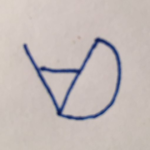
My maker’s mark represents my name and so, is only placed on items when I’m personally satisfied with their quality.
Daniel Arrington